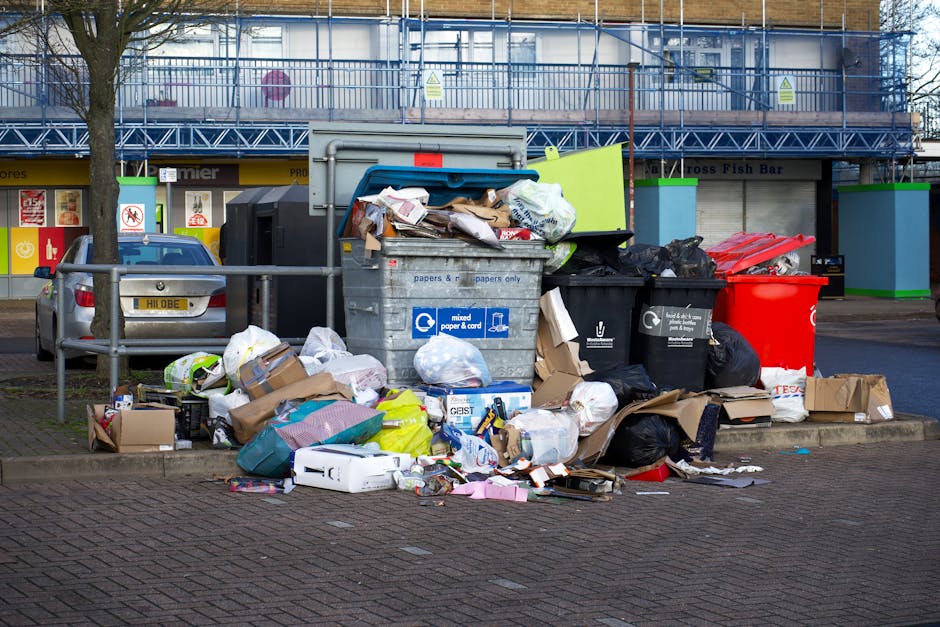
Rubbish removal Chiswick High Road Turnham Green: a practical local guide
If you are looking into Rubbish removal Chiswick High Road Turnham Green, you are probably dealing with one of those jobs that looks small at first and then suddenly grows legs. A few bags in the hallway. A broken wardrobe. Builder's offcuts. A tired sofa that has been "waiting to go" for two months. Sound familiar?
This guide explains how rubbish removal works in the Turnham Green and Chiswick High Road area, what to expect on the day, how to choose the right method, and where people often go wrong. It also covers safety, compliance, and the practical differences between rubbish removal, skip hire, grab hire, and wait-and-load options. The goal is simple: help you make a sensible decision without faffing about.
For readers who want to compare related services as they go, you may also find it useful to look at skip hire, man and van waste collection, or waste recycling services.
Table of Contents
- Why rubbish removal matters in Chiswick High Road and Turnham Green
- How rubbish removal works
- Key benefits and practical advantages
- Who this is for and when it makes sense
- Step-by-step guidance
- Expert tips for better results
- Common mistakes to avoid
- Tools, resources and recommendations
- Law, compliance, standards and best practice
- Options, methods and comparison table
- Case study or real-world example
- Practical checklist
- Conclusion
- Frequently asked questions
Why Rubbish removal Chiswick High Road Turnham Green Matters
Chiswick High Road is busy, visible, and rarely forgiving when clutter builds up. Flats above shops, period homes, shared access roads, rear lanes, limited parking, and everyday foot traffic all add a bit of friction to waste clearance. In other words, rubbish removal here is not just about getting rid of waste. It is about doing it in a way that does not disrupt neighbours, block access, or create more stress than the mess already has.
Turnham Green also has a mix of domestic and commercial properties, so waste jobs tend to vary a lot. One day it might be a garden clearance after a weekend of pruning. The next could be office furniture, packaging, or old stock from a retail unit. That variety matters because the right removal method depends on what you are moving, how much there is, and how quickly it needs to go.
There is also the simple reality of London life: space is tight. Bags pile up. Fridges linger in hallways. Old carpet rolls end up in corners. Let's face it, once rubbish starts taking over a room, the room stops feeling usable. Fast clearance restores space, but it also restores momentum. People often underestimate that bit.
If your project involves mixed waste from a refurbishment or refurbishment-adjacent tidy-up, it can help to compare with builders waste removal or construction waste disposal when the load includes heavier, more awkward materials.
Expert summary: In a dense local area like Turnham Green, the best rubbish removal service is not always the one that removes the most waste. It is the one that matches access, timing, waste type, and disposal method without creating extra hassle.
How Rubbish removal Chiswick High Road Turnham Green Works
At a practical level, rubbish removal is straightforward. You identify the waste, arrange collection, the team arrives, loads the items, and the waste is taken for sorting, reuse, recycling, or disposal. The details, though, can vary quite a bit depending on the method used.
Typical rubbish removal process
- Assessment: You describe the waste, access, and location. Photos are often helpful, especially for mixed or bulky items.
- Method selection: A provider may suggest man and van, wait-and-load, grab hire, or another suitable option.
- Arrival and loading: The crew arrives at the agreed time and loads the waste safely.
- Separation and routing: Recyclable material is separated where possible, while non-recyclables are handled appropriately.
- Completion: The site is left clear, and any necessary paperwork or disposal record is issued according to the operator's process.
A good provider will ask sensible questions. Is it loose rubbish or bagged waste? Are there stairs? Is the property on a main road? Does the waste contain anything restricted? These are not nitpicks. They determine whether the job can be done efficiently and safely.
For people who need speed and do not want a container sitting outside all day, wait and load skip hire can be a useful alternative. If access is especially tight, grab hire services may be worth exploring, while smaller domestic clear-outs often fit well with domestic skip hire.
Sometimes the issue is not volume but privacy. Old files, bank statements, or personal documents should be handled carefully, and confidential shredding may be the more sensible route than general rubbish removal. Different waste, different answer. Simple really.
Key Benefits and Practical Advantages
People usually think of rubbish removal as a convenience service. That is true, but it is not the whole story. The real value is what convenience unlocks: time, safety, and a cleaner way to finish a job properly.
- Fast clearance: Useful when you need a room, driveway, shop floor, or office space back quickly.
- Less manual lifting: Helpful for bulky items such as wardrobes, mattresses, appliances, and broken furniture.
- Better for awkward access: Ideal where a skip would block parking or where there is no sensible place to leave one.
- Cleaner presentation: Particularly relevant for high-visibility streets and shared residential entrances.
- Flexible disposal: Can suit mixed waste, one-off clear-outs, or smaller jobs that do not justify a larger container.
- Lower stress: You avoid the stop-start feeling of trying to do it yourself over several weekends.
There is also a psychological benefit that gets overlooked. Once the rubbish is gone, the project feels real again. The spare room becomes a spare room, not a storage limbo. The back office becomes workable. The kitchen refit can actually move on. That matters more than people admit.
If you are comparing waste solutions, it can be helpful to review skip sizes and prices so you can judge whether a collection service or a skip would be better value for your particular job. Sometimes a skip is right. Sometimes it is overkill.
Who This Is For and When It Makes Sense
Rubbish removal in this part of West London tends to suit a wide range of people. A lot wider than you might think. It is not just for big clear-outs or building work.
Common users of rubbish removal services
- Homeowners clearing lofts, garages, spare rooms, or renovation debris.
- Tenants preparing to move out and needing a quick final clear-up.
- Landlords and letting agents dealing with left-behind items or end-of-tenancy rubbish.
- Shops and offices disposing of packaging, shelving, furniture, or old stock.
- Builders and tradespeople needing a practical solution for mixed site waste.
- Families handling bulky item disposal after a house move or bereavement clear-out.
It makes sense when the waste is bulky, the access is awkward, or you simply do not want the delay of organising transport yourself. It also makes sense where the street is busy and a large skip could be inconvenient or require permit planning.
For a home clear-out, house clearance or garage and loft clearance may fit better than a general service. For commercial premises, office clearance is often a cleaner route, especially if desks, chairs, and filing materials are involved.
If you are dealing with something more specific, such as a broken appliance or old sofa, the right specialist page can save time too: fridge and appliance removal or mattress and sofa disposal.
Step-by-Step Guidance
Here is a simple way to approach rubbish removal without overthinking it. A bit of structure saves a lot of back-and-forth later.
- Sort what needs to go. Separate general rubbish, bulky items, recyclables, and anything that may need special handling.
- Check access. Think about stairs, parking restrictions, loading space, shared entrances, and lift access if relevant.
- Take quick photos. A few clear images often help more than a long explanation. Use daylight if possible; oddly enough, rubbish looks bigger in a dim hallway.
- Decide on timing. Do you need same-day clearance, or can it wait a few days? That choice changes the best option.
- Match the method. Choose between man and van, skip hire, wait-and-load, or grab hire based on quantity and access.
- Confirm waste types. Be clear about whether there are mattresses, fridges, plasterboard, paint, or any hazardous items.
- Prepare the site. Move cars if needed, clear a path, and keep pets or children away from the loading area.
- On the day, do one final walk-through. Make sure everything intended for removal is visible and accessible.
A small tip from real life: if you think a pile is "probably fine" to leave for sorting later, it usually becomes the pile that delays everything. Deal with it now if you can. Future-you will be grateful, genuinely.
If you want to book quickly once you know what you need, the book online page is a sensible next step. For costs and planning, the pricing and quotes information is also worth reviewing before you commit.
Expert Tips for Better Results
The difference between a smooth clearance and a stressful one is often in the preparation. Nothing flashy. Just decent planning.
- Group waste by type. Mixed loads are manageable, but separating obvious categories helps the team load faster and recycle more effectively.
- Be honest about volume. Underestimating waste is the easiest way to create delays or extra cost.
- Keep access clear. One parked car or a locked side gate can be enough to slow everything down.
- Protect surfaces if needed. Stairwells, communal hallways, and narrow corridors can be vulnerable when bulky items are moved.
- Ask what cannot be taken. Hazardous items should be disclosed before the team arrives, not after.
- Think ahead on recycling. A little sorting upfront can make the disposal route much cleaner.
Another practical point: if your waste is mostly recyclable construction material, ask whether construction waste clearance or builders waste removal offers a better fit than a broad all-purpose collection. The right category can save you from paying for a service you do not really need.
For larger or heavier loads, grab options can be easier on access. For tighter urban jobs, a vehicle that loads and leaves quickly may be the sweet spot. Not glamorous, but effective.
Common Mistakes to Avoid
Most problems with rubbish removal are surprisingly predictable. That is good news, because predictable problems are easy to dodge.
- Leaving sorting until the last minute. This usually leads to confusion, especially with mixed household and trade waste.
- Forgetting restricted items. Paint tins, chemicals, gas cylinders, batteries, and similar items need careful handling.
- Assuming every provider handles everything. They do not. Always check what is accepted before booking.
- Choosing the wrong method for the site. A skip is not always ideal on a constrained road; a grab or wait-and-load approach may work better.
- Ignoring parking and access. In a place like Chiswick High Road, that can be the difference between smooth collection and a headache.
- Not checking permit needs. If you are considering a container on public land, understanding skip hire permits or skip permits is sensible.
One more thing people forget: mattresses, sofas, and fridges can have their own handling requirements. It is better to flag them early than try to squeeze them into a generic collection at the end. That rarely ends well.
Tools, Resources and Recommendations
You do not need a truckload of equipment to organise rubbish removal well, but a few simple tools help.
- Phone camera: Take clear photos of the waste and access route.
- Simple inventory: A written list of large items helps avoid missed pieces.
- Tape measure: Useful for bulky furniture, appliances, or odd-shaped items.
- Bin bags or sacks: Helpful for smaller mixed rubbish that needs bundling.
- Gloves and closed shoes: Basic, but worth saying. Nails and broken ceramics have no manners.
When comparing service options, these pages are particularly useful:
- rubbish removal for general clearance needs
- grab lorry hire for heavier or more awkward material
- same-day skip hire when time is tight
- enclosed and lockable skip hire for secure or high-visibility jobs
- waste recycling services if you want to understand what happens after collection
For sensitive jobs or business clearances, a bit of reassurance matters too. You can review the company's approach to payment and security, insurance and safety, and the overall business background on about us. That sort of detail is not exciting, granted, but it builds confidence.
Law, Compliance, Standards, or Best Practice
Waste removal in the UK sits within a framework of responsible handling, and that applies just as much to a local collection in Turnham Green as it does to a larger site clearance. You do not need to become an expert overnight, but it helps to understand the broad expectations.
In plain English, waste should be collected, transported, and processed by a competent operator who can deal with it responsibly. Mixed rubbish, commercial waste, construction debris, and hazardous items all have different handling expectations. Some materials can be recycled easily. Others need special care. A proper service should be transparent about that.
Best practice usually includes:
- clear description of the waste before collection
- separation of recyclable material where practical
- special handling for items that should not go into standard mixed waste
- safe lifting and loading procedures
- careful management of access, parking, and site safety
For construction-related jobs, it is worth checking whether the load includes heavy rubble, timber, plasterboard, or demolition waste. These materials can be handled differently, and demolition waste removal is often more appropriate than a generic collection. If the job is larger still, site clearance or muck away services may be a better operational fit.
One sensible rule: if you would be unsure about an item in your own home, mention it. That includes fridges, paints, sharps, old chemicals, and anything that looks like it belongs in a special category. Better a careful conversation than a messy surprise. Truth be told, that applies to a lot of life.
Options, Methods, or Comparison Table
Different waste jobs call for different approaches. Here is a simple comparison that may help you narrow it down.
| Method | Best for | Strengths | Possible limitations |
|---|---|---|---|
| Rubbish removal / man and van | Household clear-outs, mixed waste, bulky items | Flexible, quick, good for awkward access | May be less efficient for very large volumes |
| Skip hire | Ongoing DIY, refurbishment, general mixed waste | Convenient for gradual filling, good for larger projects | May need space and possibly a permit |
| Wait and load | Busy roads, short jobs, fast turnaround | No container left behind, useful where space is tight | Requires everything to be ready when the vehicle arrives |
| Grab hire | Heavy, loose, or bulky loads | Excellent for larger volumes and awkward material | Needs suitable access for the vehicle |
As a rule of thumb, if the waste is small to medium and access is decent, rubbish removal is often the most straightforward option. If the waste is heavy rubble, a grab solution may be smarter. If you need time to fill a container, skip hire works well. There is no prize for choosing the most complicated method, by the way.
Case Study or Real-World Example
Picture a typical late-afternoon clear-out on or near Chiswick High Road. A small business has replaced its old office furniture, boxed up outdated files, and gathered a few broken bits from the storeroom. Nothing dramatic. But the pile is awkward, access is limited, and the team wants the space clear before the next morning.
In that sort of situation, the practical choice is usually a fast collection with minimal disruption. The crew arrives, checks the load, and removes desks, chairs, packaging, and miscellaneous waste in one visit. The old filing cabinet that nobody wanted to deal with? Gone. The corner that had become a repository for "just put it there for now"? Empty again. Nice and simple.
Now compare that with a home renovation job. A client replacing flooring and stripping out old kitchen units may be better served by a larger waste solution, especially if the waste is generated over several days. Here, a broader service such as builders skip hire or construction waste clearance may be more efficient.
The real lesson is this: the "best" removal method depends on the shape of the job, not just the amount of rubbish. A good provider helps you match the method to the mess. That is what you want.
Practical Checklist
Use this quick checklist before booking rubbish removal in Chiswick High Road or Turnham Green.
- Have I identified everything that needs to be removed?
- Do I know whether the waste is general, bulky, recyclable, or hazardous?
- Is access clear for loading and parking?
- Have I taken photos of the waste and entrance route?
- Do I need same-day collection or a planned slot?
- Would a skip, grab hire, or wait-and-load option be better value?
- Have I checked whether any items need special handling?
- Am I confident the service fits the property and street conditions?
- Have I reviewed pricing information and payment details?
- Do I know where to go if I want to book or ask a question?
If you want to compare the practical route with other services, what can go in a skip is a helpful page for checking waste types, while recycling and sustainability explains the broader disposal approach in a plain, user-friendly way.
Get a free quote today and see how much you can save.
Conclusion
Rubbish removal Chiswick High Road Turnham Green is really about making a cluttered, awkward job feel manageable. The right approach depends on access, waste type, timing, and how much disruption you can tolerate. Once those pieces are clear, the decision gets much easier.
For some people, a direct collection is the perfect fit. For others, skip hire, grab hire, or a wait-and-load arrangement makes more sense. The point is not to pick the trendiest option. It is to choose the one that suits the street, the waste, and the day you want back.
If you are still deciding, take ten minutes to look at your waste properly, not just in passing. That small pause usually saves a much bigger headache later. And when the last bit is finally gone, the space feels lighter. Quiet, even. That is the bit people remember.
Frequently Asked Questions
What is the best rubbish removal option for Chiswick High Road and Turnham Green?
The best option depends on the waste, access, and how quickly you need it gone. For smaller mixed loads and bulky household items, rubbish removal or man and van is often the easiest choice. For heavier or larger jobs, a grab service or skip may be better.
Can rubbish removal handle bulky items like sofas and mattresses?
Yes, bulky items are often part of rubbish removal jobs. Sofas, mattresses, wardrobes, and similar items are common. If the item is especially awkward or needs a specialist route, pages like mattress and sofa disposal can be more helpful.
Is rubbish removal better than skip hire for a busy road?
Often, yes. On a busy street or where parking is tight, rubbish removal can be more practical because nothing needs to sit outside for long. That said, if the waste will build up over several days, skip hire may still be the better fit.
How do I know whether I need a permit for waste collection?
You usually only need permit-related planning if a skip or container is placed on public land. For direct rubbish removal, permits are often not part of the process. If you are comparing options, skip permits pages are useful to review.
What items should I mention before booking?
Mention anything bulky, heavy, sharp, hazardous, electrical, or unusual. That includes fridges, paint, chemicals, batteries, glass, and confidential papers. Being upfront helps the provider choose the right method and avoid problems on the day.
Can rubbish removal be arranged quickly?
Yes, sometimes it can be arranged very quickly, depending on availability and the size of the load. If speed matters, same-day skip hire or direct rubbish removal are both worth asking about.
What happens to the rubbish after collection?
Collected waste is typically sorted for reuse, recycling, or disposal depending on the material. Recyclable items are separated where possible, while other waste is handled according to the operator's process and the waste type.
Is rubbish removal suitable for office clear-outs?
Yes, it can be. Office clearance jobs often include furniture, packaging, old files, and general waste. If the job involves sensitive paperwork, confidential shredding may also be relevant.
How can I make the collection faster on the day?
Group the waste together, clear access routes, and take away anything you do not want removed. If possible, send photos in advance. Small preparation steps can save a surprising amount of time.
What if I have mixed waste from a renovation?
Mixed renovation waste can often be collected, but it is important to describe it properly. Builders waste removal or construction waste clearance may be a better match if the load includes rubble, timber, or other trade materials.
Are there items that need special disposal?
Yes. Hazardous materials, confidential documents, appliances, and some electrical items can need specialist handling. If in doubt, ask before the job is booked rather than trying to guess. That is usually the safer route.
How do I compare rubbish removal with other services?
Compare by volume, access, timing, and waste type. If you want something quick and tidy, rubbish removal is often ideal. If you need a container for several days, skip hire may work better. If the load is heavy and loose, grab hire can be more efficient.
Where can I find more information before booking?
Useful pages include skip sizes and prices, what can go in a skip, pricing and quotes, payment and security, and recycling and sustainability. They help you make a more informed decision without having to second-guess the basics.